

Wembley Stadium’s original attendance record still stands at 126,047, set at the 1923 FA Cup Final before the ground was even fully finished. Numbers like that explain why the most iconic sports venues in Britain carry so much weight with fans who’ve never set foot inside them. Here’s a closer look at the grounds that built British sport’s reputation.
Wembley Stadium, London

Wembley is England’s national stadium and, at 90,000 capacity, the largest football ground in the UK. The current stadium opened in 2007, replacing the original 1923 venue, and it hosts FA Cup finals, England internationals and major concerts throughout the year.
Its record football attendance under the current build is 89,874, set at the 2008 FA Cup Final. The stadium’s partially retractable roof and its famous arch, visible from miles around, have made it as recognizable as any sports venue in the world.
90,000 seats make Wembley the biggest football stadium in Britain, and it remains the benchmark every other UK ground gets measured against.
Lord’s, London
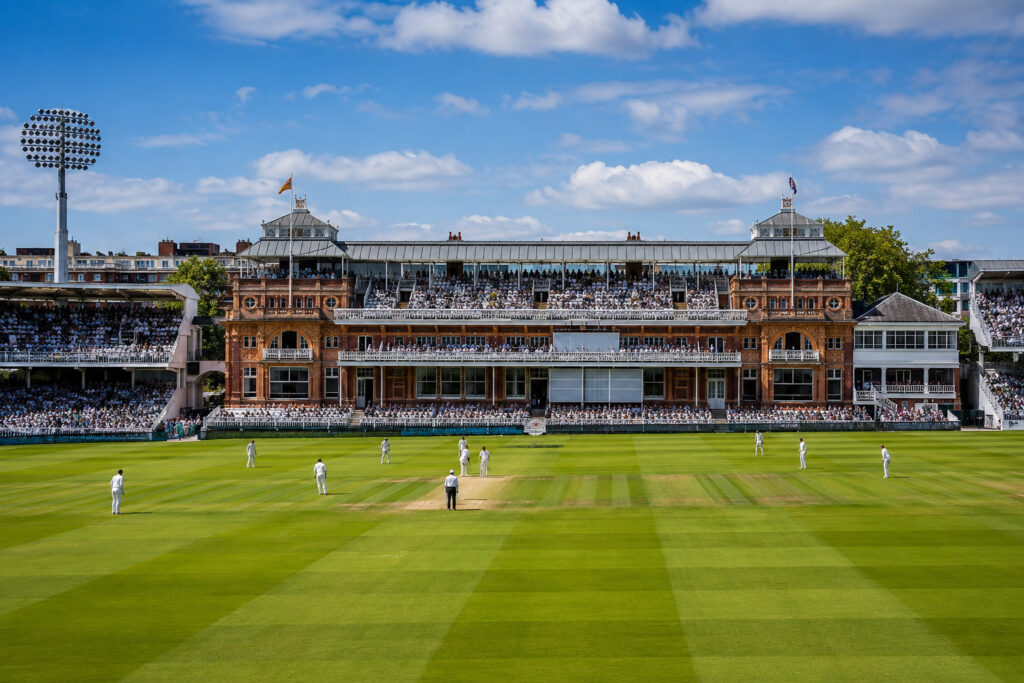
Lord’s has been the home of cricket since its current site opened in 1814, and it remains owned by the Marylebone Cricket Club to this day. It hosted its first Test match in 1884, a game England won by an innings and five runs against Australia.
The ground’s Pavilion, built in 1889-90, is one of world sport’s most recognizable buildings, complete with a strict members’ dress code and the famous Long Room where players walk out to bat. Lord’s also houses the world’s oldest sporting museum, a fitting detail for a ground this steeped in tradition.
A Weathervane That’s Seen Everything
The Father Time weathervane, gifted to Lord’s in 1926, has survived lightning strikes and the Second World War and still watches over the ground from its perch today.
Old Trafford, Manchester
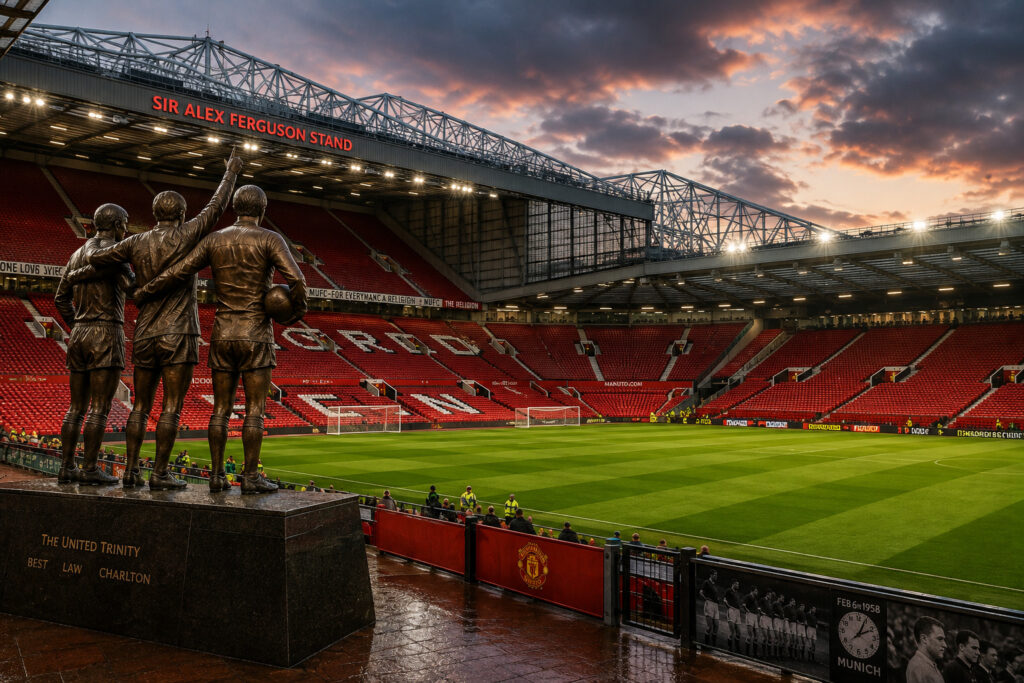
Old Trafford opened in 1910 and remains the largest club football stadium in the UK at 74,310 capacity. Manchester United have played there ever since, aside from a spell sharing City’s ground after Second World War bomb damage forced repairs.
The stadium hosted matches at the 1966 World Cup and the 2012 London Olympics, adding international pedigree to its status as United’s home. Plans are now in place for a new 100,000-seat stadium next door, designed by Foster + Partners, which would eventually replace it.
Anfield, Liverpool
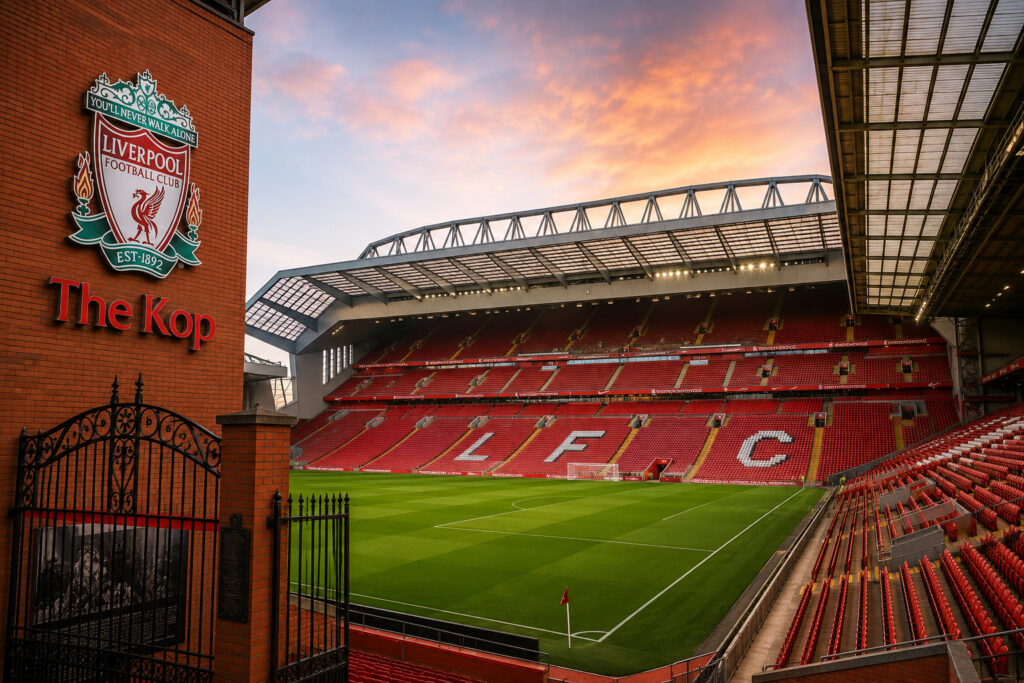
Anfield has been Liverpool’s home since the club’s founding, and its current capacity sits at 61,276. The ground’s most famous feature is the Kop, a single-tier stand holding over 12,000 fans, originally designed by Archibald Leitch and named after a hill in South Africa where many Liverpudlian soldiers died during the Second Boer War.
Over 12,000 fans fill the Kop alone on matchday, making it the biggest single-tier stand in the Premier League.
You’ll Never Walk Alone
The stadium’s connection to its famous anthem has become as recognizable as the ground itself, sung by the entire crowd before kickoff at every home match.
Centre Court, Wimbledon
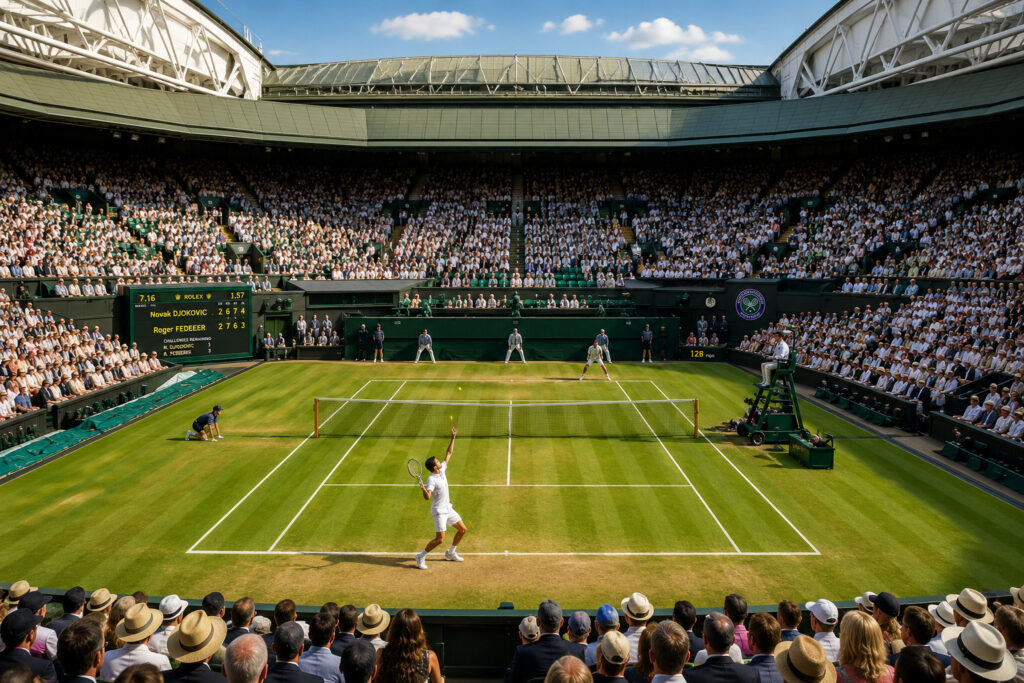
Centre Court opened in 1922 and remains the primary stage for the Wimbledon Championships, tennis’s oldest Grand Slam tournament. It survived bomb damage during the Second World War, when five 500-pound bombs hit the court during an air raid in 1940, destroying 1,200 seats.
A major 2009 renovation added a retractable roof, letting play continue through rain for the first time in the tournament’s history. Today it holds just under 15,000 fans, a modest number compared to football or rugby venues, but one that makes tickets some of the hardest to get in British sport.
Murrayfield, Edinburgh
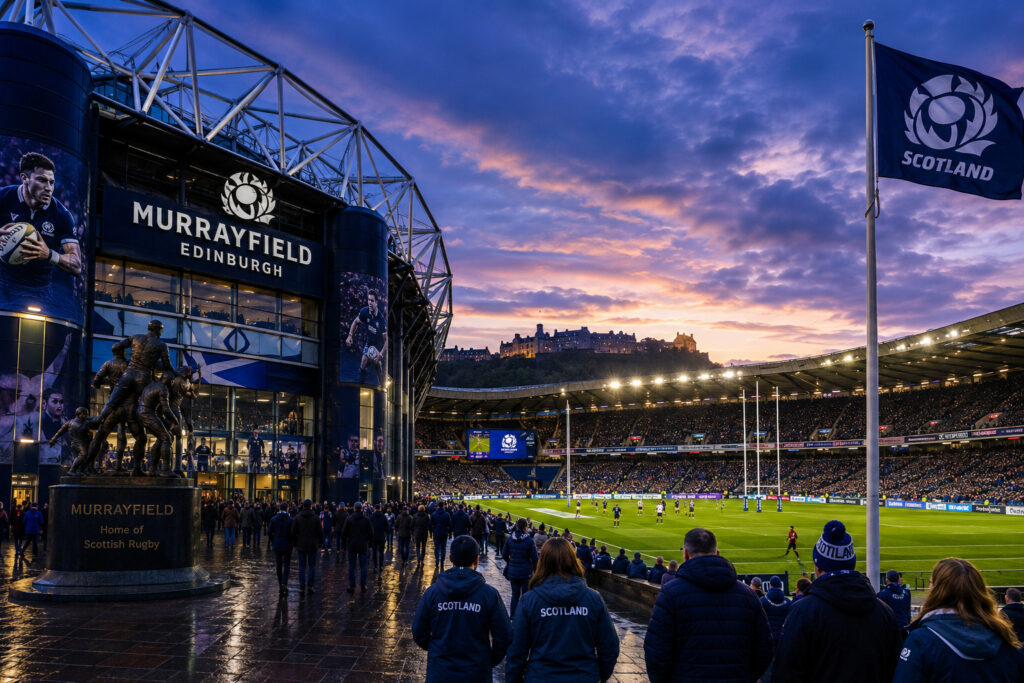
Murrayfield is the home of Scottish rugby and holds 67,144 fans, making it the largest stadium in Scotland. It regularly sells out for Six Nations fixtures, especially the Calcutta Cup match against England, one of rugby’s oldest and fiercest rivalries.
The stadium operates as a cashless venue on matchdays, a small but telling sign of how much the fan experience has modernized even at a ground with this much history behind it.
Key Takeaways
- Wembley’s capacity: 90,000, the largest football stadium in Britain.
- Lord’s history: home of cricket since 1814, hosting its first Test match in 1884.
- Old Trafford’s size: 74,310 capacity, the biggest club football ground in the UK.
- Centre Court’s roof: added in a 2009 renovation, letting Wimbledon play through rain.
- Hampden’s record crowd: 149,415 fans in 1937, still the European record for an international match.
FAQs
What is the capacity of Wembley Stadium?
90,000, making it the largest football stadium in Britain.
When did Lord’s host its first Test match?
In 1884, when England beat Australia by an innings and five runs.
How big is the Kop at Anfield?
It holds more than 12,000 fans in a single tier, the largest in the Premier League.
When did Centre Court get its retractable roof?
During a major renovation completed in 2009.
What is Hampden Park’s record attendance?
149,415, set for a Scotland versus England match in 1937.
Conclusion
From Wembley’s arch to the Father Time weathervane at Lord’s, the most iconic sports venues in Britain carry history that goes well beyond their capacity numbers. Each one has shaped its sport in a different way, and each remains a genuine bucket-list stop for any fan who wants to see where the game’s biggest moments actually happened.
