
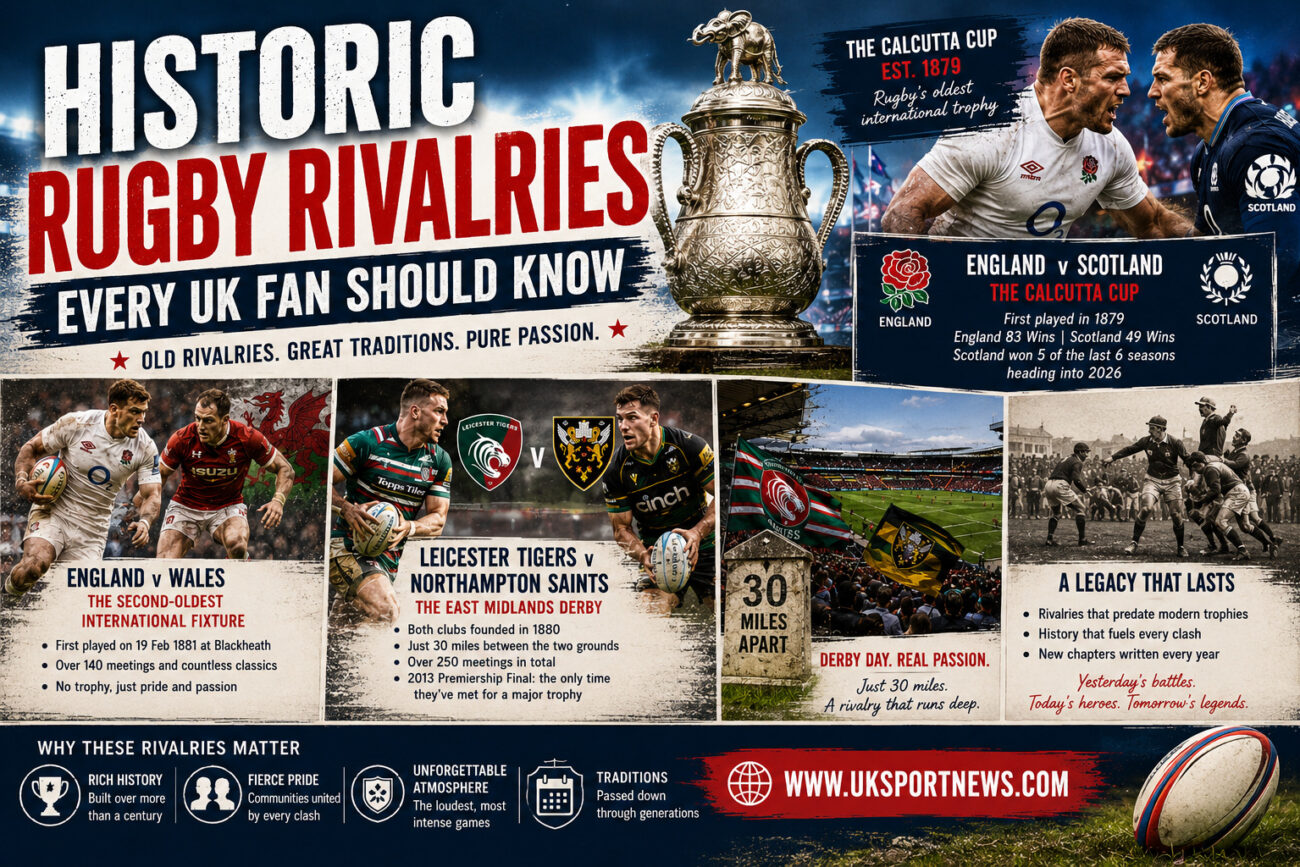
On August 29, 1882, eleven Australian cricketers defended a tiny target of 85 runs at The Oval. They bowled England out for 77 to win by seven runs. The defeat stunned British sports fans and birthed a legendary feud. A mock obituary in The Sporting Times declared that English cricket had died and its ashes would be taken to Australia.
That defeat sparked The Ashes. It remains one of the most passionate sports rivalries in Britain today. But cricket is only one piece of the puzzle.
Across football pitches, rugby grounds, and riverbanks, British sports feature deep historic divisions. Local identity and working-class pride drive these intense rivalries across every season.
Here is an insider look at the most passionate sports rivalries in Britain and what makes them special.
The Old Firm: Glasgow’s Divided Football Heart
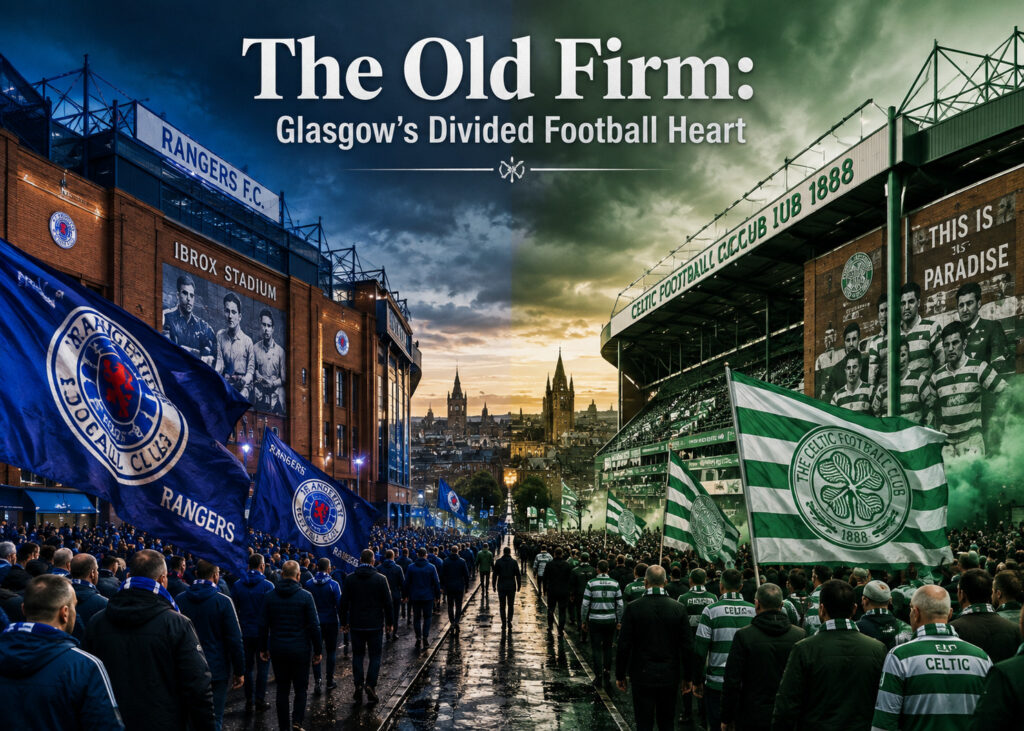
Glasgow splits into two distinct colors on derby day: green and blue. Celtic and Rangers have battled for dominance in Scottish football since their first meeting in 1888.
The rivalry goes far beyond tactical decisions on the pitch. It carries deep cultural, political, and religious history that spans generations of Glasgow families.
Celtic were founded in 1887 to assist poor Irish immigrants in Glasgow’s East End. Rangers quickly became the flagship club for the city’s native Protestant population.
When matchday arrives, the city stops completely. Over 50,000 fans pack into Ibrox Stadium or Celtic Park to create an intimidating wall of noise.
Crucial Old Firm Milestones
- First official clash: Celtic beat Rangers 5-2 in May 1888.
- Total competitive matches: The clubs have met more than 400 competitive times in official competitions.
- Trophy dominance: The two sides have shared over 100 Scottish league title wins combined.
The atmosphere during an Old Firm derby is unlike anything else in world sports. Tackle reactions shake the stadium stands, and away fans face a wave of hostility from the opening minute.
It stands clear near the top of the most passionate sports rivalries in Britain. The fixture dictates the mood across Glasgow for weeks after the final whistle.
The North West Derby: English Football’s Ultimate Clash
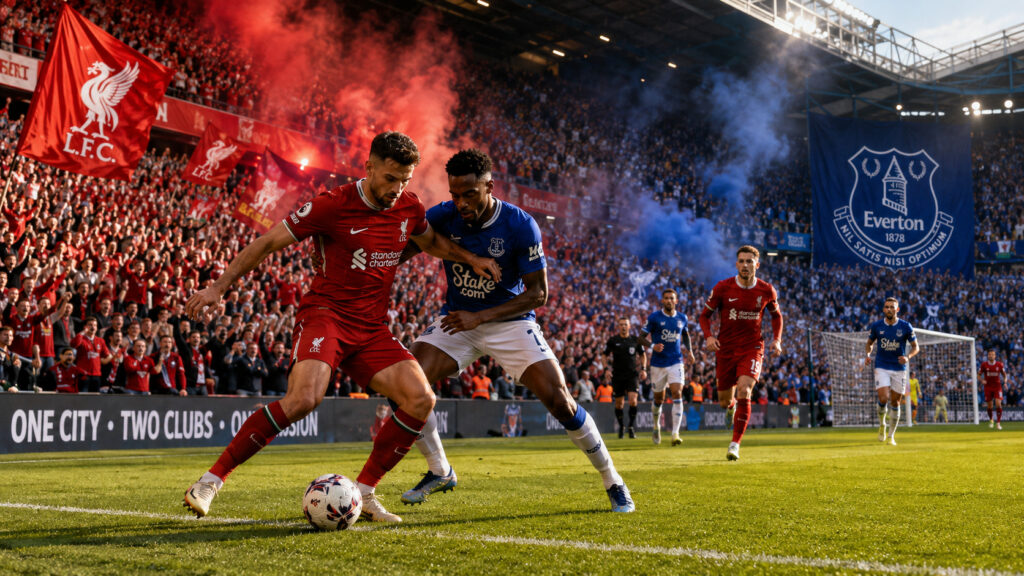
Just 35 miles separate Liverpool and Manchester. Their football feud began on the industrial docks of the 19th century and expanded onto the pitch.
Liverpool Football Club and Manchester United are the two most decorated teams in English football history. Every match between them carries massive stakes for league standings and historic bragging rights.
Manchester United dominated the Premier League era under manager Sir Alex Ferguson. Liverpool reclaimed international glory under Jürgen Klopp and remains a global powerhouse.
Whenever these two teams meet, global TV audiences reach hundreds of millions of viewers.
Historic Head-to-Head Totals
- Combined English League Titles: The two clubs hold 39 English top-flight titles between them.
- European Cups: Liverpool hold six European titles, while Manchester United have won three.
- Total Meetings: They have played over 210 official competitive matches since 1892.
The North West derby delivers raw tension on every occasion. Players feel the pressure from the crowd on every pass, tackle, and shot.
Fans rate this fixture among the most passionate sports rivalries in Britain due to its sheer scale. Defeat ruins an entire month for supporters in either city.
The Good Friday Derby: Rugby League’s Northern Battle
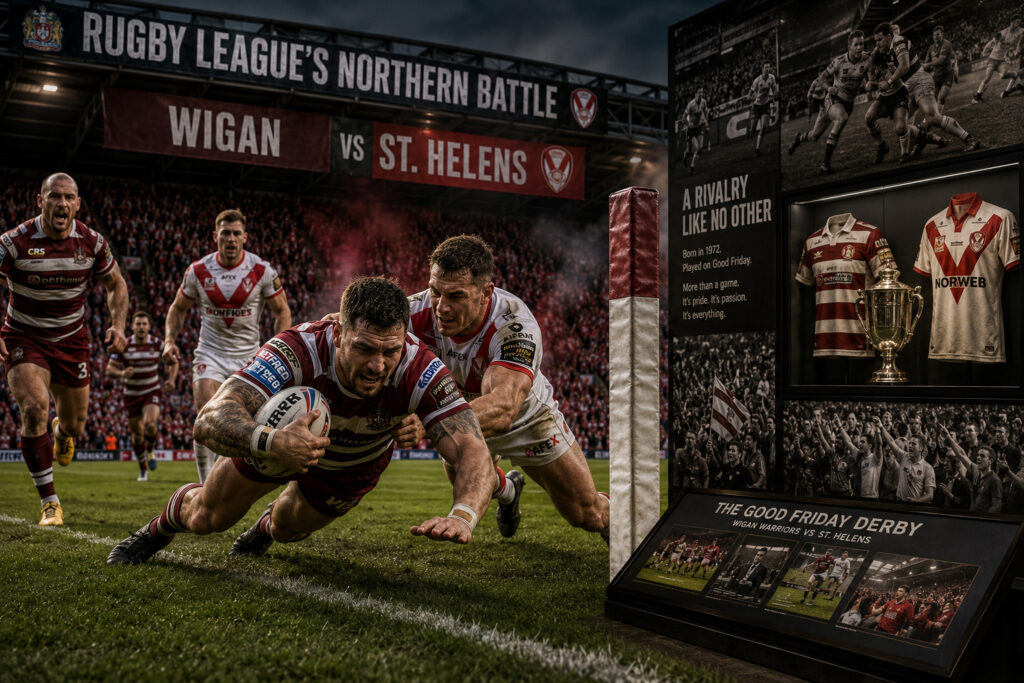
Move away from football, and you find rugby league’s fiercest rivalry along the M62 corridor. Wigan Warriors and St Helens RFC have clashed since rugby league split from union in 1895.
Their annual Good Friday matchup is a highlight of the British sporting calendar. The towns sit just nine miles apart in Lancashire.
Families often divide their loyalty between red-and-white Wigan jerseys and the red vee of St Helens.
Unlike modern football grounds, rugby league grounds allow fans to mingle outside turnstiles before kick-off. But once the whistle blows, physical collisions on the pitch match the intensity in the stands.
What Makes the Good Friday Derby Special
- Local Talent: Both squads rely heavily on home-grown players raised in the local area.
- Physical Drama: Big hits and quick play-the-balls draw massive roars from packed terraces.
- Centuries of Tradition: The clubs have met over 300 official times across all competitions.
The rivalry is built on mutual respect and brutal athletic effort. Players throw themselves into tackles while fans sing non-stop for 80 minutes.
It represents one of the most passionate sports rivalries in Britain outside mainstream association football.
The Ashes: International Cricket’s Legendary Feud
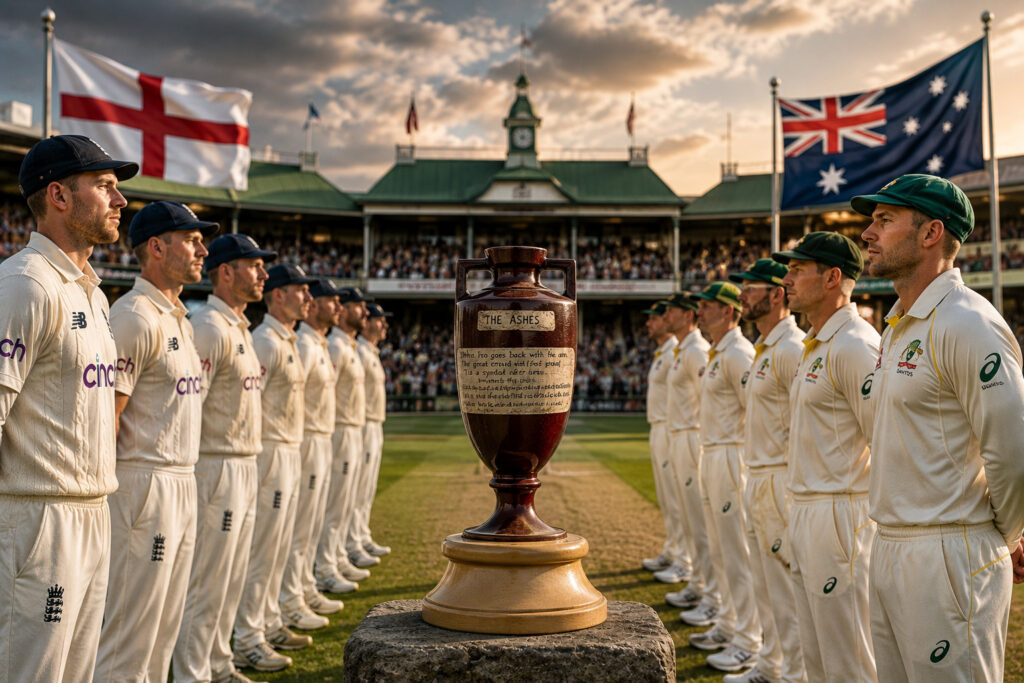
Cricket is often viewed as a calm summer pastime. But Test matches between England and Australia shatter that stereotype completely.
The Ashes started back in 1882 after Australia’s historic victory at The Oval. Since that fateful summer, the two nations have played for a tiny terracotta urn kept at Lord’s Cricket Ground.
The rivalry features five-day Test matches spread over several weeks. English crowds at venues like Edgbaston and Headingley create vibrant, rowdy atmospheres in the Western Terrace.
Australia brings relentless pressure and fast bowling to match the hostile away crowds.
Key Facts About The Ashes
- Origin Year: 1882, following Australia’s seven-run win over England in London.
- The Trophy: The physical terracotta Ashes urn stands just four inches tall.
- Test Match Format: Five matches per series, played across major historic venues.
Players endure five straight days of intense tactical warfare under constant crowd noise. Australian legends like Shane Warne and English icons like Sir Ian Botham built their reputations in these matches.
It stands as one of the most passionate sports rivalries in Britain because national pride rests on every ball.
The Boat Race: University Rivalry on the River Thames
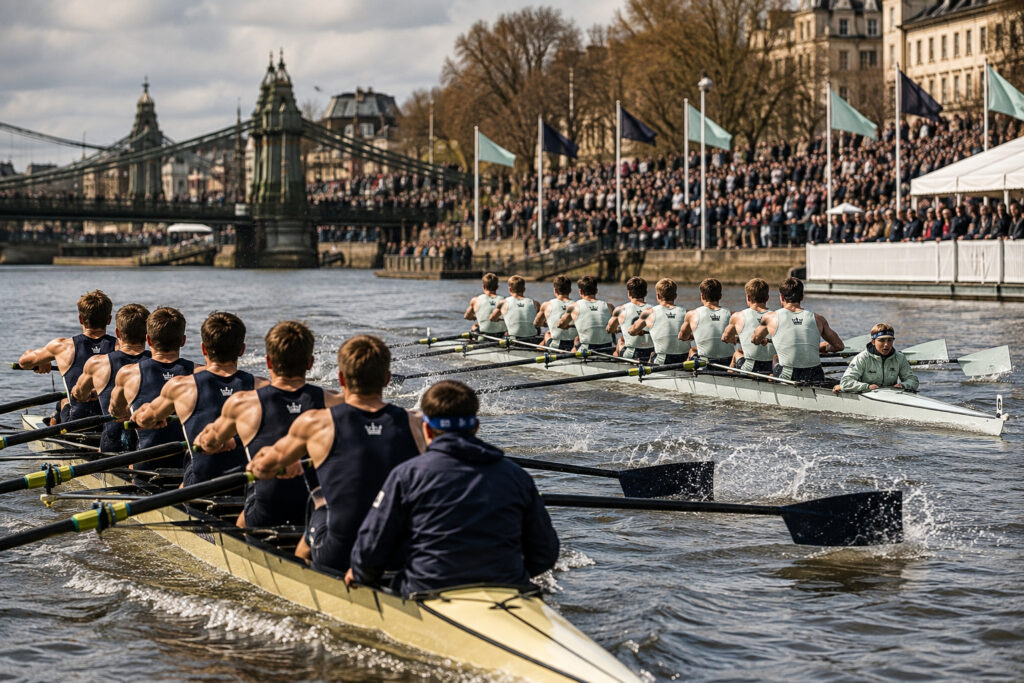
In April 1829, university friends from Oxford and Cambridge agreed to race rowing boats along the River Thames. That single challenge grew into one of Britain’s oldest sporting events.
The Boat Race features men’s and women’s eights racing along a 4.2-mile course from Putney to Mortlake. Over 250,000 spectators line the riverbanks to watch the action live for free.
Rowers spend six months training twice a day for a single 20-minute race. There are no second chances or league points to recover later in the season.
The physical strain leaves athletes exhausted as they cross the finish line near Chiswick Bridge.
Boat Race Numbers and Stats
- Course Distance: Exactly 4.2 miles (6.8 km) along the tidal Thames in West London.
- Overall Record: Cambridge leads the men’s series with 88 wins to Oxford’s 81.
- Historic Dead Heat: The 1877 race was declared a dead heat after judges could not separate the boats.
The rivalry creates intense drama on the water as boat oars clash in narrow river channels.
Even neutral viewers tune in to see which crew conquers the brutal Thames currents. It deserves its spot among the most passionate sports rivalries in Britain.
The Steel City Derby: Sheffield’s Fiery Divide
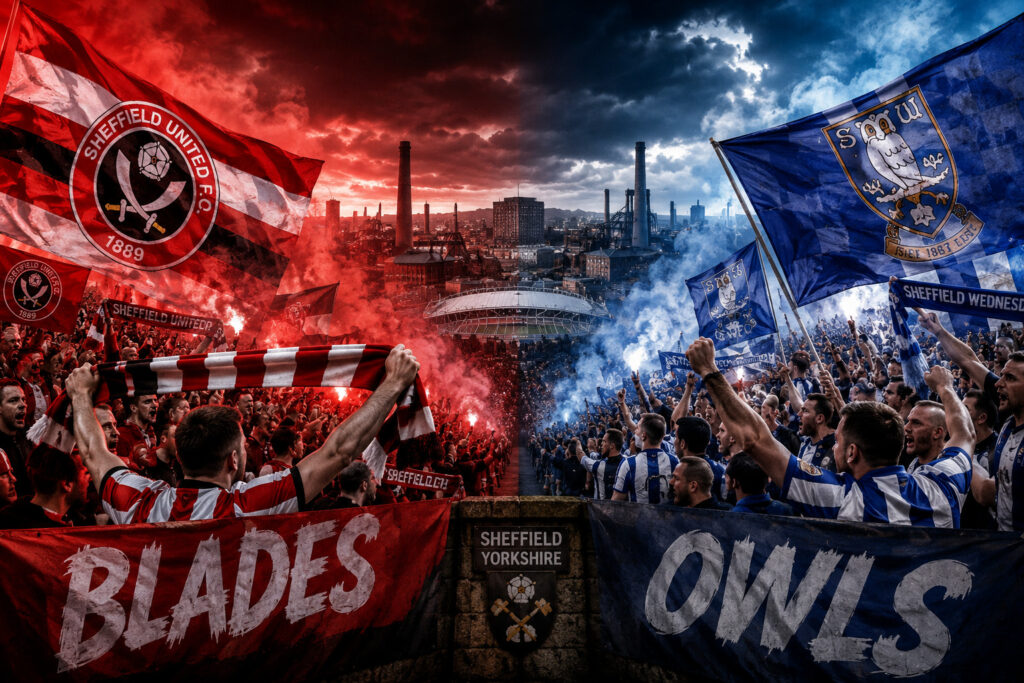
Sheffield is the birthplace of modern club football. Sheffield FC was founded in 1857 as the world’s first official football club.
Today, the city’s professional football heart splits between Sheffield United and Sheffield Wednesday. Their meetings are known across the country as the Steel City derby.
Sheffield United play at Bramall Lane, while Sheffield Wednesday call Hillsborough home. Both stadiums sit within the same industrial city borders.
The two clubs do not play every season due to divisional movements. That scarcity makes every derby match explosive when it finally happens.
Key Steel City Derby Elements
- Bramall Lane Noise: Home fans build a deafening pre-match roar during club anthems.
- Hillsborough History: One of England’s classic traditional football venues with massive terrace stands.
- Bragging Rights: Victory secures dominance in local workplaces and pubs for years.
Players raised in Yorkshire understand what the match means to working-class local supporters.
The Steel City derby regularly ranks alongside the most passionate sports rivalries in Britain. The local intensity matches any fixture in London or Manchester.
Why the Most Passionate Sports Rivalries in Britain Matter to Fans
British sports culture is built on inherited family loyalty and geographical pride. Most fans do not pick a team based on recent trophy success.
They support the club their parents and grandparents supported before them. This deep generational connection makes matchdays deeply personal for millions of people across the UK.
Local derby matches allow communities to express their identity on a national stage. Working-class industrial history fuels competition between neighboring towns along regional train lines.
Strict ticket allocations for away supporters create incredible noise battles inside modern British stadiums.
Here are the primary factors that sustain these rivalries across centuries:
- Geography: Short distances make travel easy for thousands of visiting supporters.
- Family Tradition: Fan loyalty passes down through generations without changing.
- Historical Events: Past controversial refereeing decisions and iconic late goals keep old grudges alive.
These factors ensure that the most passionate sports rivalries in Britain stay vibrant year after year.
Key Takeaways
- The Old Firm clash: Celtic and Rangers have played over 400 competitive matches in Glasgow since 1888.
- North West dominance: Liverpool and Manchester United share 39 English top-flight league titles.
- Rugby league history: The Good Friday derby between Wigan Warriors and St Helens dates back to 1895.
- Ashes cricket tradition: England and Australia have competed for the four-inch terracotta urn since 1882.
- Thames rowing legacy: Cambridge leads Oxford in The Boat Race, which attracts 250,000 live riverbank spectators.
- Steel City pride: Sheffield’s football divide ranks among the most intense local rivalries in British sports.
Frequently Asked Questions
What is the oldest sports rivalry in Britain?
The Boat Race between Oxford and Cambridge University started in 1829 and remains one of Britain’s oldest active rivalries.
Why is Celtic vs Rangers called the Old Firm?
The term originated in the early 20th century because both clubs benefited financially from their massive combined gate receipts.
Which British football derby has the most trophies combined?
The North West derby between Liverpool and Manchester United features two clubs with 39 combined English league titles.
Can away fans attend British derby matches safely?
Yes, British stadiums enforce strict security measures and segregated seating areas to keep home and away fans safe.
Conclusion
From the roaring terraces of Glasgow to the sunlit riverbanks of the Thames, the most passionate sports rivalries in Britain showcase incredible competitive spirit. Deep family roots, regional pride, and legendary sporting moments make these events unforgettable for fans worldwide. As long as fans gather on Saturday afternoons, these iconic British rivalries will continue to burn bright for generations to come.
