
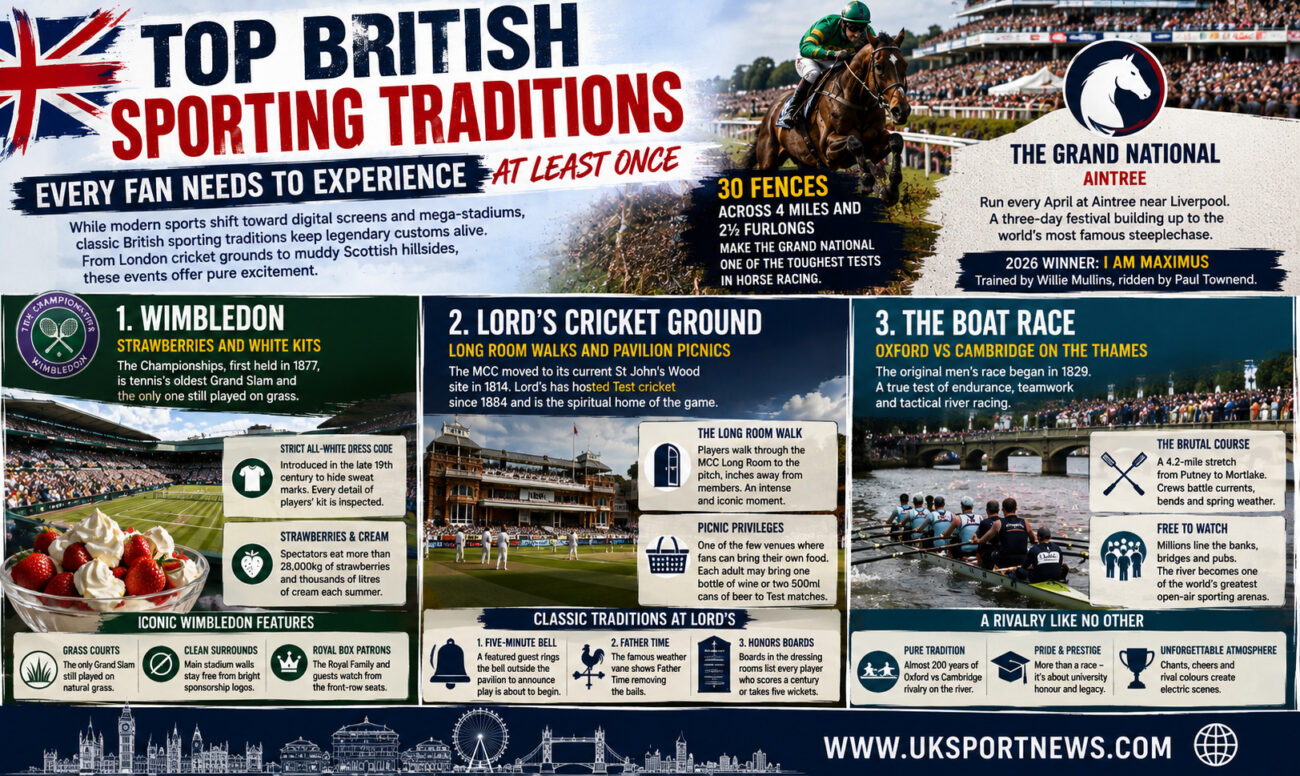
Silence falls over Centre Court on a warm July afternoon in SW19. A player tosses a ball high into the air. Spectators in the stands quietly finish off fresh bowls of strawberries and cream.
Moments like this show how deeply history runs through the UK calendar. British sporting traditions continue to connect modern fans with centuries of passion and heritage.
While modern sports shift toward digital screens and mega-stadiums, classic British sporting traditions keep legendary customs alive. From London cricket grounds to muddy Scottish hillsides, these events offer pure excitement. Let’s explore the classic rituals, strict dress codes, and legendary venues that make British sports culture special.
British Sporting Traditions at Wimbledon: Strawberries and White Kits
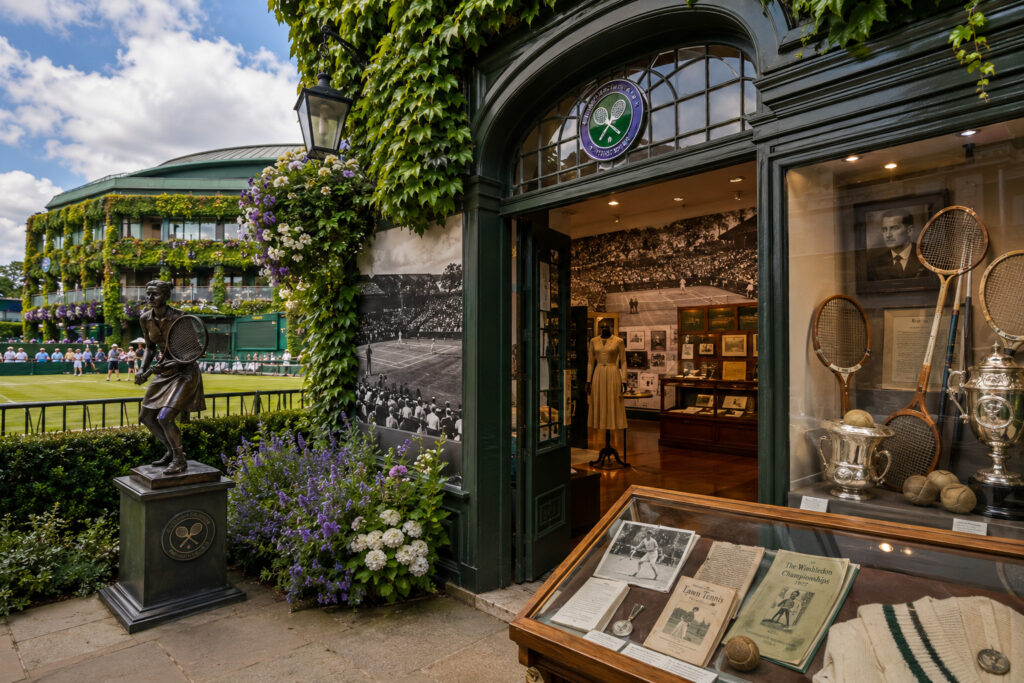
No tournament in world tennis guards its history quite like the Championships at Wimbledon. The All England Lawn Tennis Club held its very first tournament in 1877. Nearly 150 years later, those early customs still govern every single match.
Fans sleep outside overnight in “The Queue” just to grab general admission ground passes. Inside the gates, they eat fresh fruit with heavy cream while watching top athletes battle on grass courts. The atmosphere feels totally different from any other stop on the professional tour.
The Strict All-White Dress Code
Players at Wimbledon must wear almost entirely white clothing on court. The club introduced this rule during the late 19th century. Organizers wanted to stop embarrassing sweat patches from showing on colored shirts.
Tournament directors inspect player gear before matches start. Even shoe soles, wristbands, and hat trims must follow strict white guidelines.
Fresh Strawberries and Cream by the Ton
Spectators eat more than 28,000 kilograms of strawberries over the two-week tournament each summer. Farmers pick these fresh berries in Kent early every morning. They ship them directly to SW19 before the gates open.
Vendors serve the berries with thousands of liters of thick cream. It remains the ultimate summer sporting snack.
Here is a quick look at iconic Wimbledon features:
- Grass courts: Wimbledon stands as the only Grand Slam tournament still played on natural grass.
- Clean court surrounds: Main stadium walls stay completely free from bright commercial sponsorship logos.
- Royal Box patrons: Members of the Royal Family watch matches alongside invited guests from front-row seats.
Lord’s Cricket Ground: Long Room Walks and Pavilion Picnics
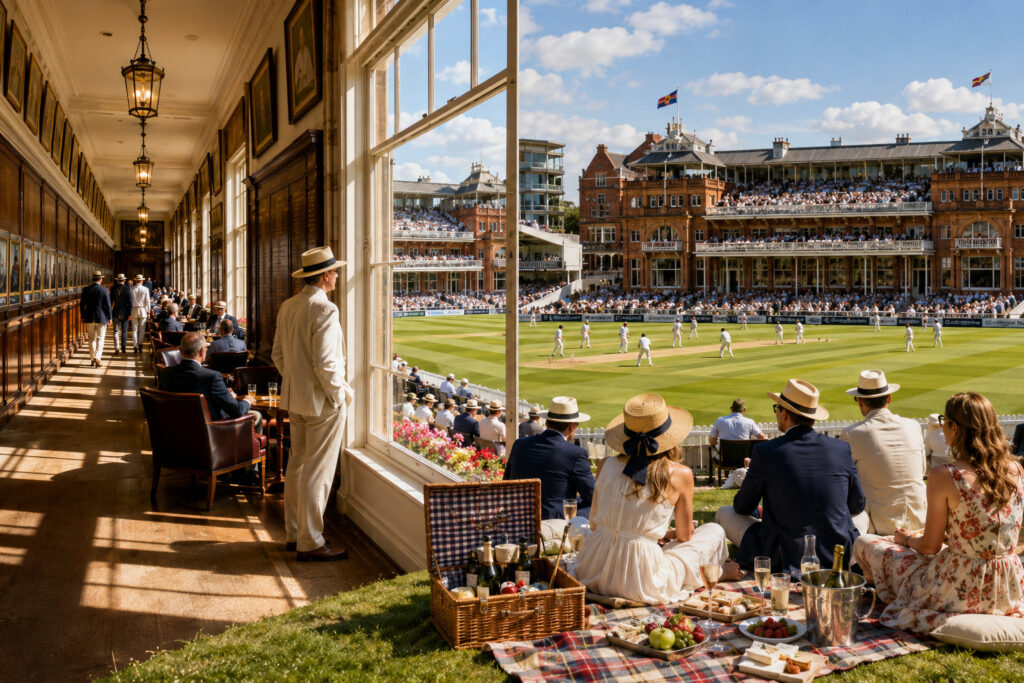
Cricket lovers across the globe view Lord’s as the spiritual home of the game. The Marylebone Cricket Club (MCC) moved to its current St John’s Wood location in 1814.
Attending a Test match at Lord’s feels like walking straight into sports history. Spectators stroll around the boundary before play begins while admiring the Victorian Pavilion.
The venue guards spectator privileges that have disappeared from almost every other elite stadium in world sport.
The Tense Long Room Walk
Players walk straight through the famous MCC Long Room to reach the pitch. Club members stand just inches away from the players as they step out.
This famous walk creates an intense, quiet moment for athletes. They walk out through double doors while facing applause or subtle glances from members.
Historic Spectator Picnic Privileges
Lord’s remains one of the few major venues where fans pack their own food. Spectators can bring homemade lunches and drinks right to their seats.
Standard entry rules permit each adult spectator to bring one bottle of wine or two 500ml cans of beer into the ground for Test matches.
Classic traditions at Lord’s include:
- Ringing the five-minute bell: A featured guest rings an iconic bell outside the pavilion to announce play.
- Father Time weather vane: A famous iron weather vane sits high above the grandstands, showing Father Time removing the bails.
- The Honors Boards: Special wooden boards inside dressing rooms list every player who scores a century or takes five wickets in a Test match here.
The Boat Race: Oxford vs Cambridge on the Thames
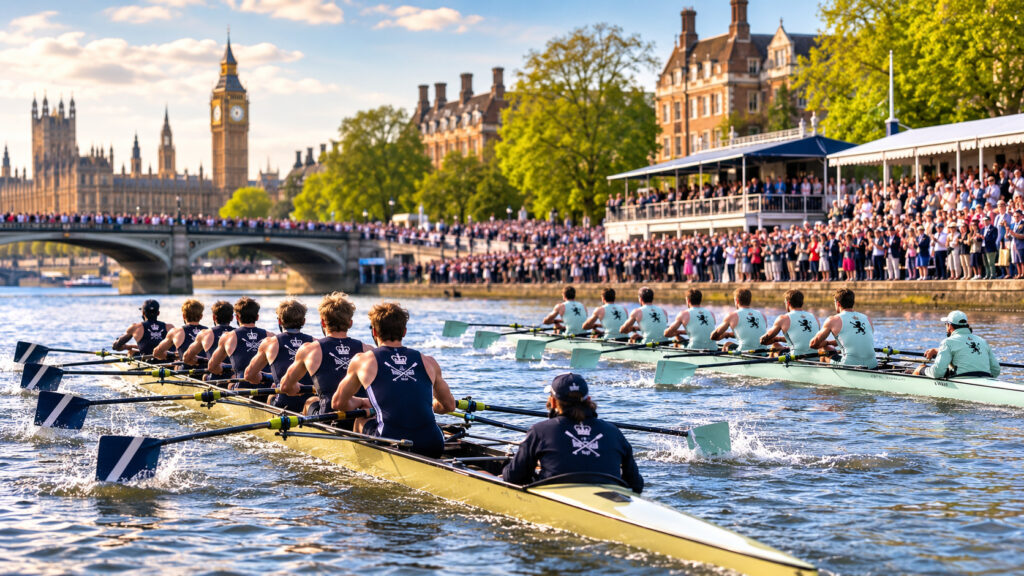
Every spring, massive crowds line the banks of the River Thames in West London. They come to watch rowers from Oxford University and Cambridge University battle head-to-head.
The original men’s event started way back in 1829. That makes it one of the oldest university rivalries in world sport. The women’s race joined the main Thames schedule in 2015.
The event shows off raw endurance, strict rhythm, and tactical river steering.
The Brutal Championship Course
Rowers tackle a grueling 4.2-mile course between Putney and Mortlake. The crews must navigate strong river currents, sharp bends, and shifting spring weather.
Tactics play a major role. Coxswains fight hard to claim the fastest water lanes near the middle of the river.
Free Riverbank Viewing for Millions
Unlike stadium events, fans do not need expensive tickets to watch this live. Supporters line up along riverbanks, public bridges, and pub gardens to cheer on their team.
The event transforms the riverfront into a massive open-air festival every spring.
Key facts about this classic river clash:
- Eight oarsmen per boat: Each crew features eight rowers led by a coxswain sitting at the stern.
- Dark Blue vs Light Blue: Oxford rows in Dark Blue gear, while Cambridge wears Light Blue.
- Tide timing: Race marshals start the contest right as the incoming tide hits peak speed.
Royal Ascot: Royal Carriages and Top Hats
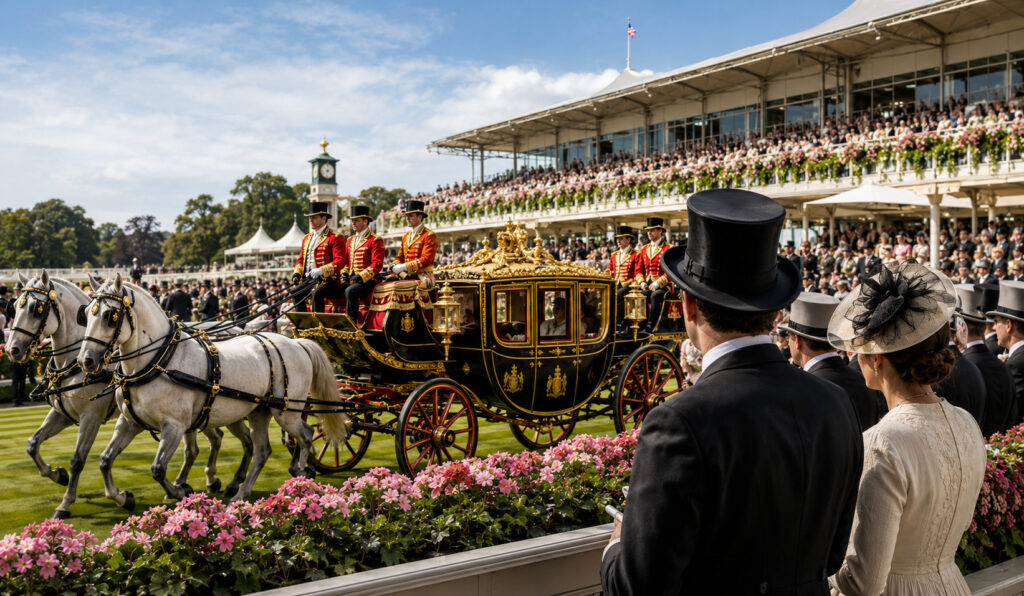
Horse racing has enjoyed a key spot in British sports culture since the reign of King Charles II. Royal Ascot stands as the absolute peak of the flat-racing calendar each June.
Queen Anne founded the racecourse in 1711 after finding an open field near Windsor Castle. Today, the five-day meet combines elite horse racing with high-end British fashion.
The dress codes and royal visits make it a standout spectacle in sports.
The Daily 2:00 PM Royal Procession
Every single race day opens with a historic Royal Procession at exactly 2:00 PM. Members of the Royal Family travel down the center of the track in open horse-drawn carriages.
Fans line up along the rails to wave as the carriages pass the grandstands. Racing starts shorty after the carriages arrive at the parade ring.
Royal Enclosure Fashion Standards
The Royal Enclosure maintains strict dress code rules for every guest. Men must wear formal morning dress with a waistcoat and top hat.
Women must wear formal day dresses paired with hats or fascinators with a solid base measuring at least 4 inches in diameter.
Highlights of Royal Ascot week include:
- The Gold Cup: A historic long-distance race covering two miles and four furlongs on Thursday.
- Global runners: Star horses travel from Europe, Australia, and America to compete for top prize money.
- Millinery displays: Eye-catching hat designs grab national news headlines throughout the five-day event.
The Highland Games: Caber Tossing in Scotland
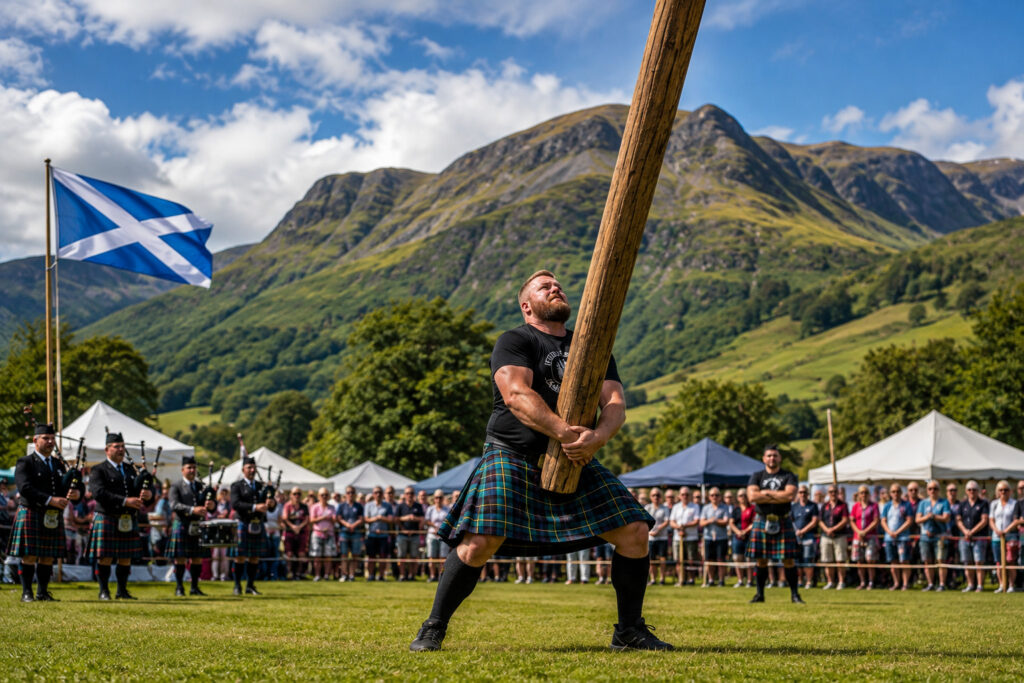
Highland Games take place across towns and villages in Scotland every summer. These gatherings highlight traditional Gaelic athletic strength, Scottish music, and regional heritage.
The famous Braemar Gathering received official Royal Patronage from Queen Victoria in 1848. Members of the Royal Family still visit the Braemar games in Aberdeenshire every September.
The athletic events test raw strength using massive wooden logs and heavy stones.
The Precision Art of the Caber Toss
The caber toss stands out as the main event in traditional heavy athletics. Competitors lift a massive tree trunk, sprint forward, and flip it completely end-over-end.
A standard competition caber measures roughly 19 feet 6 inches long and weighs around 175 pounds.
Judges score each throw on accuracy rather than total distance. The perfect throw flips the log straight over so it lands at a perfect “12 o’clock” angle.
Heavy Events and Massed Pipes
Athletes also throw heavy stones, hurl metal hammers, and pull off weight-over-bar lifts. Pipe bands play traditional Scottish tunes between events while dancers perform on wooden stages.
Classic games highlights include:
- The Scottish Hammer Throw: Athletes spin a heavy metal ball attached to a stiff wooden handle before hurling it backward over their shoulder.
- Tug-of-war: Teams of eight pull against each other in grueling tests of team leg power and grip.
- Massed pipe bands: Hundreds of bagpipers gather on the central field for opening and closing shows.
Boxing Day Sports: Festive Football and Racing

December 26 holds a special place for sports fans across the United Kingdom. Boxing Day sports matches bring millions of fans to stadiums and pubs right after Christmas Day.
The holiday fixture list goes back to the early days of organized league football. Preston North End played West Bromwich Albion in the first official Boxing Day league match in 1888.
It remains one of the busiest, most thrilling days on the sports calendar.
Premier League Derby Day Matches
Football leagues plan the December 26 match schedule to cut down travel time for visiting supporters. Nearby rival clubs often face off in intense derby matches.
Stadiums record some of their highest attendance numbers of the year during these festive games.
King George VI Chase at Kempton Park
Jump racing also plays a huge role in holiday sports fun. Kempton Park hosts the historic King George VI Chase, which ran for the first time in 1937.
Top jump horses clear 18 fence obstacles across three miles in one of the season’s top races.
Key elements of Boxing Day sport:
- Packed stadium terraces: Ticket sales skyrocket as families head out to matches together over the bank holiday.
- Winter weather battles: Matches often play out on cold pitches under heavy British rain or snow.
- Full television coverage: Fans can watch back-to-back live matches from noon until late evening.
The FA Cup Final: Wembley Steps and Ribbon Ceremonies
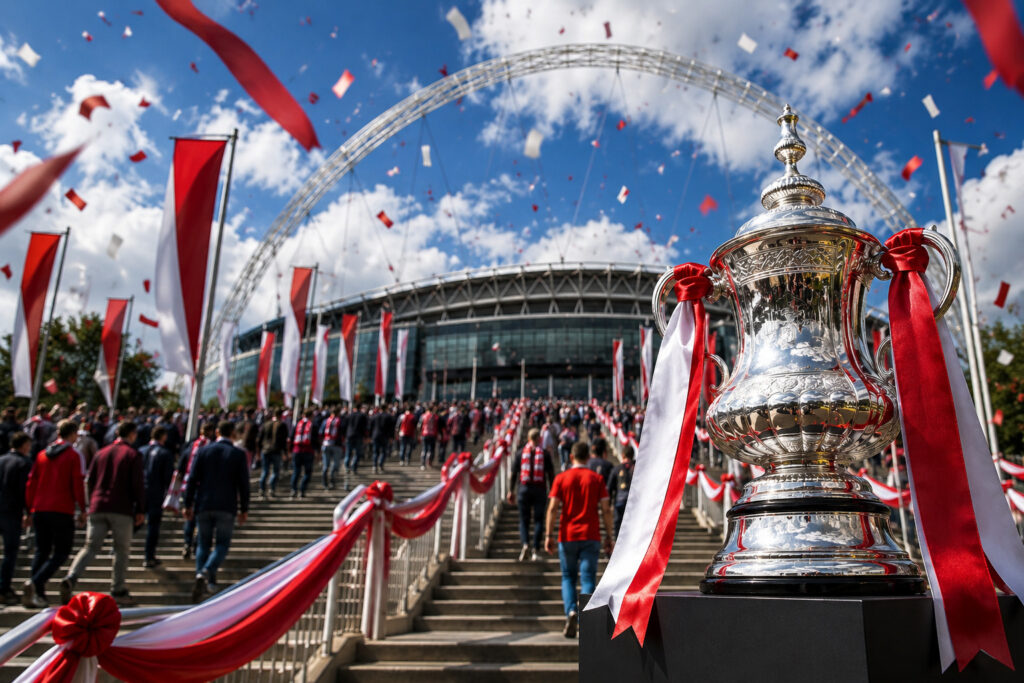
The FA Cup is the oldest national football tournament in the world, starting in the 1871-72 season. Its final at Wembley Stadium features iconic traditions that football fans recognize in an instant.
Modern tournaments build temporary stages on the pitch for trophy presentations. The FA Cup sticks with historic stadium traditions instead.
The winning team climbs up into the main stands to collect their medals and lift the trophy.
Climbing the 107 Wembley Steps
Players walk up 107 steps from the pitch to reach the Royal Box at Wembley Stadium. Captains lead their teammates through the crowd to collect their silver medals.
This walk gives supporters standing alongside the staircase an up-close view of the winning squad.
Pitchside Engraving and Silk Ribbons
Official engravers carve the winning club’s name directly into the base of the trophy during the final minutes of the match.
Assistants tie silk ribbons matching the winning team’s colors onto the trophy handles right before the presentation.
Key FA Cup traditions include:
- Abide With Me: Supporters sing this historic hymn inside Wembley Stadium right before kickoff.
- Giant-killing tradition: Small lower-league clubs get the chance to host Premier League giants in early rounds.
- The red carpet roll-out: Match officials lead both teams onto the pitch along a red carpet to shake hands with guests of honor.
Key Takeaways
- Wimbledon heritage: The tournament enforces strict all-white kit rules and serves tons of fresh strawberries every summer.
- Lord’s matchday freedom: Spectators can bring picnic baskets and wine onto the grounds for Test matches.
- Thames river spectacle: The Boat Race offers free bankside viewing across a 4.2-mile course between Putney and Mortlake.
- Royal Ascot style: Morning dress codes and daily royal carriage processions define this historic June racing meet.
- Highland Games strength: The caber toss tests precision log flipping at historic Scottish gatherings like Braemar.
- Boxing Day schedule: December 26 features packed football league schedules and elite jump racing at Kempton Park.
- FA Cup trophy walk: Winners climb 107 Wembley steps to collect the historic trophy with fresh team ribbons attached.
Frequently Asked Questions
Why do tennis players have to wear white clothing at Wimbledon?
The tournament enforced all-white dress codes in the 19th century to stop sweat stains from showing on player clothing.
Can anyone watch the Oxford and Cambridge Boat Race for free?
Yes, spectators can stand along the public riverbanks of the Thames without buying tickets.
What size caber do athletes flip in the Highland Games?
A competition caber usually measures around 19 feet 6 inches in length and weighs close to 175 pounds.
When did the tradition of Boxing Day football matches start?
The first official English Football League match on Boxing Day took place back in 1888.
How many steps do FA Cup winners climb to reach the Royal Box?
Players climb 107 steps from the Wembley pitch up to the Royal Box to collect the trophy.
Conclusion
British sporting traditions continue to thrive because they connect modern fans with generations of history. Whether you are enjoying picnics at Lord’s, watching rowers along the Thames, or cheering in football stands on Boxing Day, these customs add unique personality to modern sport. Exploring these historic events shows why British sporting traditions remain deeply loved by fans all across the globe today.
