
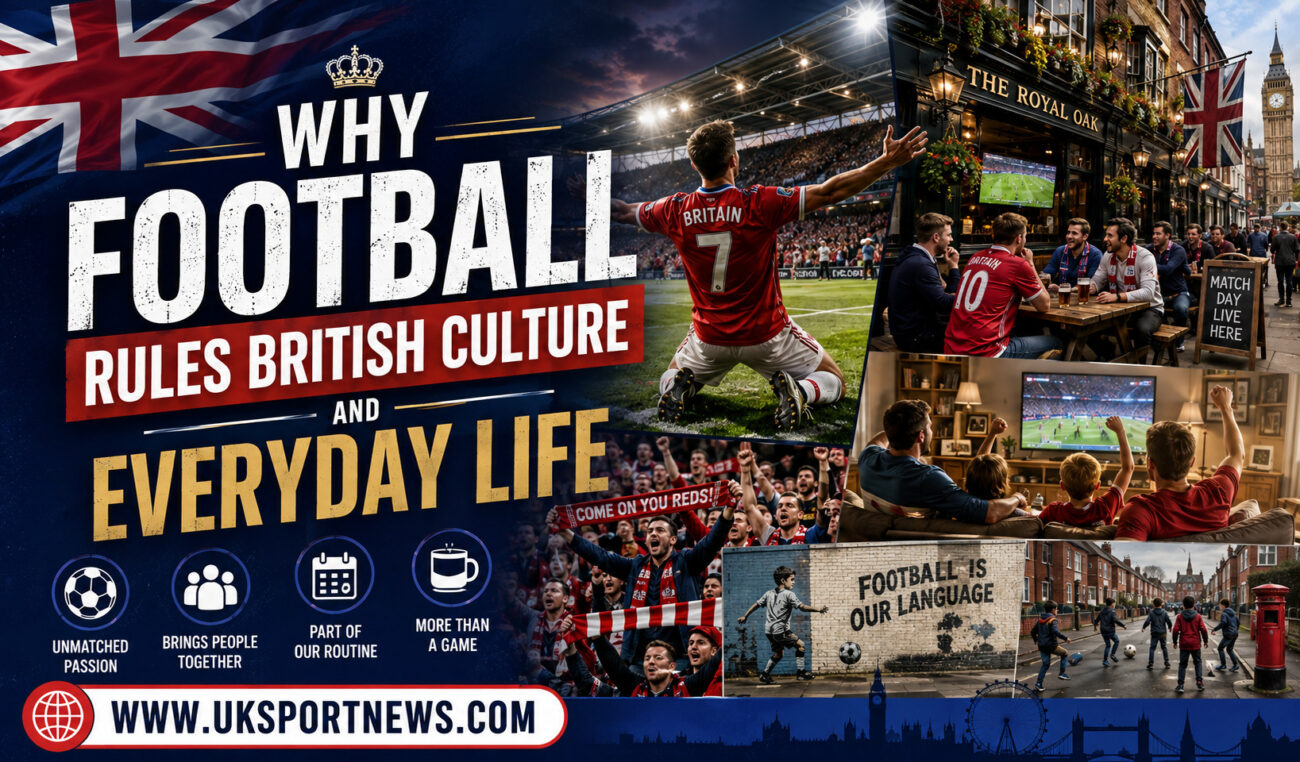
During the 2024/25 season, roughly 33.9 million people in the UK watched live Premier League football or Match of the Day highlights, which works out to 55 percent of the entire UK television audience engaging with one league in a single year. No royal event, no other sport, and barely any television drama gets close to that reach on a recurring basis. Football in Britain is not simply a sport people watch. It is the default language half the country uses to talk to each other.
A Sport Built Into the National Routine
Football’s grip on British culture starts with infrastructure most people never think twice about. Nearly every town has a Sunday league pitch, a five-a-side centre, or a school field that gets used for football long after the final bell rings. The FA oversees one of the largest grassroots football structures on the planet, and that base is the reason the sport feels less like a hobby and more like a shared national habit.
Saturday afternoons still carry the rhythm football gave them decades ago, even for people who never set foot inside a stadium. Radio phone-ins, pub screens, and the classic 3pm kickoff slot are baked into the week in a way that other sports have never managed to replicate.
Where Football Shows Up in Everyday British Life
Conversation and Small Talk
Football works as social glue precisely because almost everyone has some opinion on it, whether they follow the sport closely or not. Office banter on a Monday morning, taxi driver small talk, and family WhatsApp groups all lean on football because it offers a shared reference point that cuts across age, background, and social class in a way few other topics can manage.
Television and Media
The Premier League is broadcast to around 643 million homes across 212 territories, with a potential global audience estimated at 4.7 billion people, yet its domestic pull remains just as striking. Ten different games drew more than three million UK viewers during the 2023/24 season alone, numbers that would be considered a huge hit for almost any other genre of television, let alone a single weekly sports fixture repeated across an entire season.
Fantasy Leagues and Digital Culture
Fantasy Premier League has turned football into a year-round obsession that extends well past ninety minutes on a Saturday. Office leagues, friend group rivalries, and transfer deadline day chaos have become a genuine British institution of their own, running in parallel with the actual football and often generating just as much conversation.
Language and Identity
Phrases born on the pitch have worked their way into everyday English, from calling something a “game changer” to describing a difficult decision as being like “playing with a broken compass” in dressing room interviews. Club identity also runs far deeper than matchday. For huge numbers of people, the team they support is tied to where they grew up, who their parents supported, and which pub they end up in every other Saturday.
Why Football Beats Every Other Sport for Cultural Reach
A handful of features explain why football sits so far ahead of rugby, cricket, or any other sport when it comes to shaping everyday British life.
- Low barrier to entry: a ball and a patch of grass is enough, unlike sports that demand expensive equipment or club membership to get started.
- Weekly, not occasional, scheduling: football runs almost every week for nine months of the year, keeping it constantly present rather than a seasonal spike of interest.
- Cross-class appeal: football has never carried the same class associations that historically shaped sports like rugby union or cricket in England.
- Multi-generational transfer: support for a club typically passes down through families, giving the sport a built-in mechanism for renewing its audience every generation.
Think of football as the default setting on a new phone. Other sports have to be actively chosen and switched on, while football is simply what most people in Britain grow up doing without ever really deciding to.
The Economic Footprint Behind the Culture
Football’s cultural dominance is backed by genuine economic weight. The Premier League generated more than seven billion euros in revenue during the 2023/24 season, and its broadcasting rights deal for the 2025 to 2028 cycle is valued at well over four billion euros annually. That kind of money funds stadiums, academies, and community programmes that keep the sport visible in towns that may never see a top flight fixture in person.
Manchester City, Liverpool, Arsenal, and the rest of the so-called Big Six sit at the commercial centre of that economy, but the effect ripples outward. Lower league clubs, most of which will never challenge for a major trophy, still function as genuine community institutions, giving football a physical presence in British life that television numbers alone cannot fully capture.
Frequently Asked Questions
Why is football so culturally important in Britain?
Football’s low cost, weekly scheduling, and cross-class appeal have embedded it into everyday British routines, conversation, and family identity in a way few other sports have matched.
How many people in the UK watch Premier League football?
Around 33.9 million people in the UK watched live Premier League matches or Match of the Day highlights during the 2024/25 season, representing 55 percent of the total UK television audience.
Is football more popular than other sports in Britain?
Yes, by both participation and television reach, football remains significantly ahead of every other sport played in the UK, though sports like boxing and rugby have strong followings of their own.
What makes English football different from football elsewhere?
The Premier League’s global broadcast reach, reaching an estimated 4.7 billion potential viewers across 212 territories, combined with England’s deep grassroots and lower league football culture, gives the English game a scale and depth few other football nations can match.
