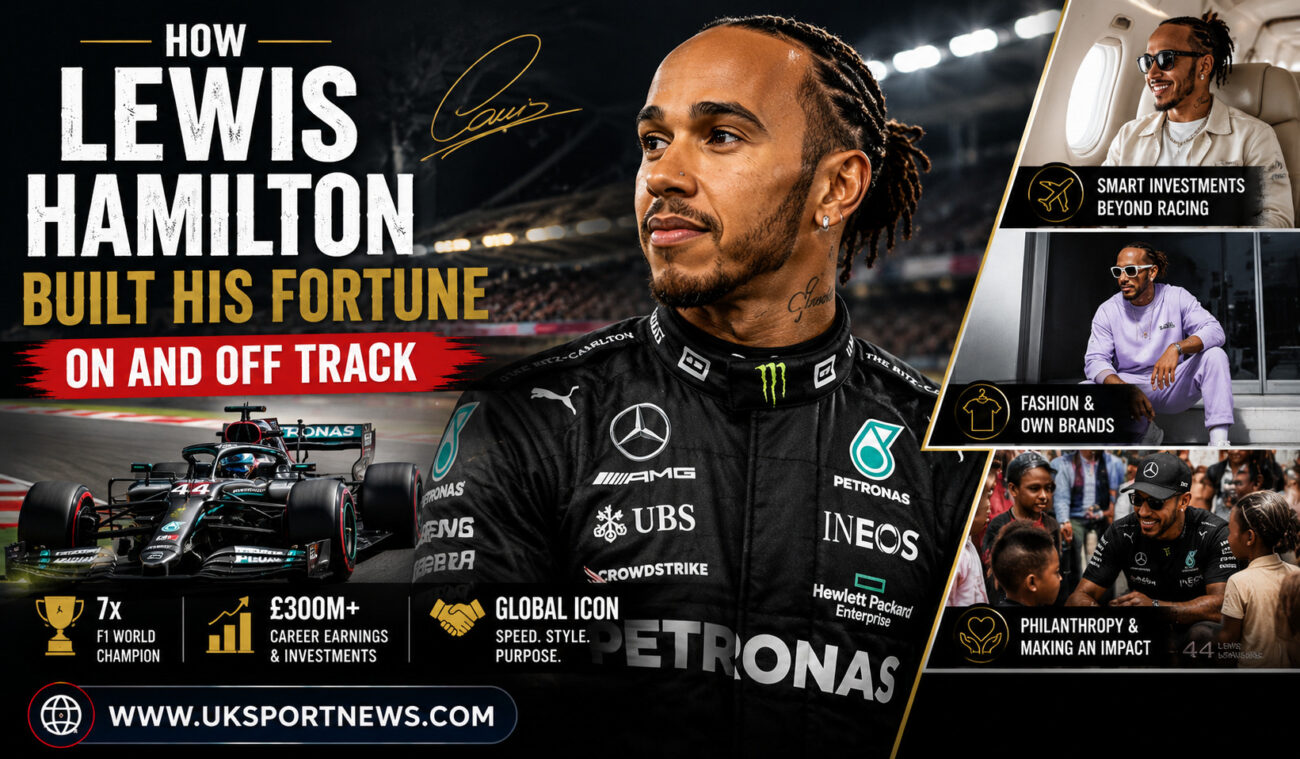
In September 2025, Lewis Hamilton became the first driver in Formula 1’s 75-year history to earn 100 million dollars in a single calendar year, a milestone reached before factoring in a single dollar from his fashion lines, film production credits, or NFL ownership stake. Hamilton’s seven world championships built his reputation on the track. What has built his fortune since is a business portfolio that now stretches from Hollywood to Denver.
The racing money that started it all
Hamilton’s core wealth still begins with Formula 1 itself. His move to Ferrari for the 2025 season came with a reported base salary between 50 and 60 million dollars a year, with performance bonuses and image rights pushing his total annual package toward nine figures, making it the most lucrative driver contract in the sport’s history. That figure comfortably exceeds his final Mercedes deal, which paid a base salary of around 45 million dollars a year after more than a decade with the team.
According to the Sunday Times Rich List 2026, Hamilton’s personal net worth stands at around 435 million pounds, while other financial estimates place his total fortune closer to 450 to 550 million dollars once business holdings and endorsements are factored in alongside his racing income.
Building a business empire off the track
In September 2025, Hamilton rebranded his commercial holding company from Project 44 to Lewis Hamilton Ventures, consolidating his businesses, investments, and brand partnerships under a single structure with a dedicated chief operating officer. The move signalled a shift from simply collecting endorsement cheques toward running a genuine, professionally managed business group.
Hamilton’s film production company, Dawn Apollo Films, co-produced the 2025 F1 movie starring Brad Pitt alongside veteran producer Jerry Bruckheimer. The film earned over 633 million dollars at the global box office, becoming the highest-grossing racing film ever made, and a sequel was greenlit in early 2026 with Hamilton continuing as a credited producer rather than simply a consultant.
He’s also built a genuine presence in fashion well beyond typical athlete endorsement deals. His TOMMYXLEWIS collaboration with Tommy Hilfiger, two capsule collections with Dior, ownership involvement in W Magazine, and a role co-chairing the 2025 Met Gala have all positioned him inside an industry most Formula 1 drivers never seriously enter. Endorsement deals across fashion and lifestyle brands, including Puma and Lululemon, are estimated to bring in around 25 to 30 million dollars a year on their own.
In 2022, Hamilton joined the Walton-Penner ownership group’s 4.65 billion dollar purchase of the Denver Broncos, at the time the largest transaction in NFL history. The minority stake has continued appreciating since, giving Hamilton direct exposure to one of American sport’s most valuable franchises.
Hamilton’s charitable foundation, Mission 44, focuses on improving access to education and careers in STEM and motorsport for underrepresented young people. His Ferrari contract reportedly directs a portion of certain salary components toward the initiative, embedding the foundation’s funding directly into his commercial deals rather than treating it as a separate philanthropic afterthought.
Not every venture has worked out
Hamilton’s business record includes genuine setbacks alongside its successes. Neat Burger, the plant-based fast food chain he launched in 2019 with Leonardo DiCaprio, closed all of its UK locations after reporting losses of around 10.6 million dollars, a reminder that Hamilton’s brand power doesn’t guarantee success in every sector he enters.
A few patterns explain why most of his other ventures have fared far better. Formula 1’s global audience skews male and older, and Hamilton’s fashion ventures deliberately target younger and more diverse demographics his racing career alone can’t reach. His stakes in the Denver Broncos and production credits on the F1 movie also function as appreciating assets rather than one-off appearance fees, and his partnerships with Dior and Tommy Hilfiger required him to build genuine fashion industry relationships rather than simply lending his face to a campaign. The shift to Lewis Hamilton Ventures with a dedicated leadership team mirrors how major entertainment and sports figures typically scale a personal brand into a lasting business.
Consider Hamilton’s off-track career like a driver switching between very different circuits. The skills that win a Formula 1 championship don’t automatically transfer to producing a Hollywood blockbuster or building a fashion label, and Neat Burger’s closure shows that transfer doesn’t always succeed even for someone with his level of commercial credibility.
Why this matters beyond Hamilton himself
Hamilton’s approach reflects a broader shift in how top athletes now think about their earning years. Rather than treating retirement as the moment business ventures begin, Hamilton has built his commercial empire in parallel with an active, elite racing career, using his platform while it’s at its strongest rather than waiting until his competitive relevance fades.
That timing advantage matters. Endorsement value, media access, and investment opportunities all tend to shrink once an athlete steps away from top-level competition, which makes Hamilton’s decision to build Dawn Apollo Films, Lewis Hamilton Ventures, and his NFL stake while still actively racing for championships a genuinely strategic choice rather than a coincidence.
Frequently asked questions
What is Lewis Hamilton’s net worth?
According to the Sunday Times Rich List 2026, Hamilton’s net worth stands at around 435 million pounds, while broader financial estimates that include business holdings place his total fortune closer to 450 to 550 million dollars.
How much does Lewis Hamilton earn from Ferrari?
Hamilton’s Ferrari contract is reported to pay a base salary of between 50 and 60 million dollars a year, with bonuses and image rights pushing his total annual package toward 100 million dollars.
What businesses does Lewis Hamilton own?
Hamilton’s portfolio includes film production company Dawn Apollo Films, fashion ventures including the Plus 44 clothing line, a minority stake in the Denver Broncos NFL franchise, and a range of endorsement partnerships, all managed under Lewis Hamilton Ventures.
Has Lewis Hamilton had any failed business ventures?
Yes. His plant-based restaurant chain Neat Burger, launched with Leonardo DiCaprio in 2019, closed all UK locations after reporting significant financial losses.
