
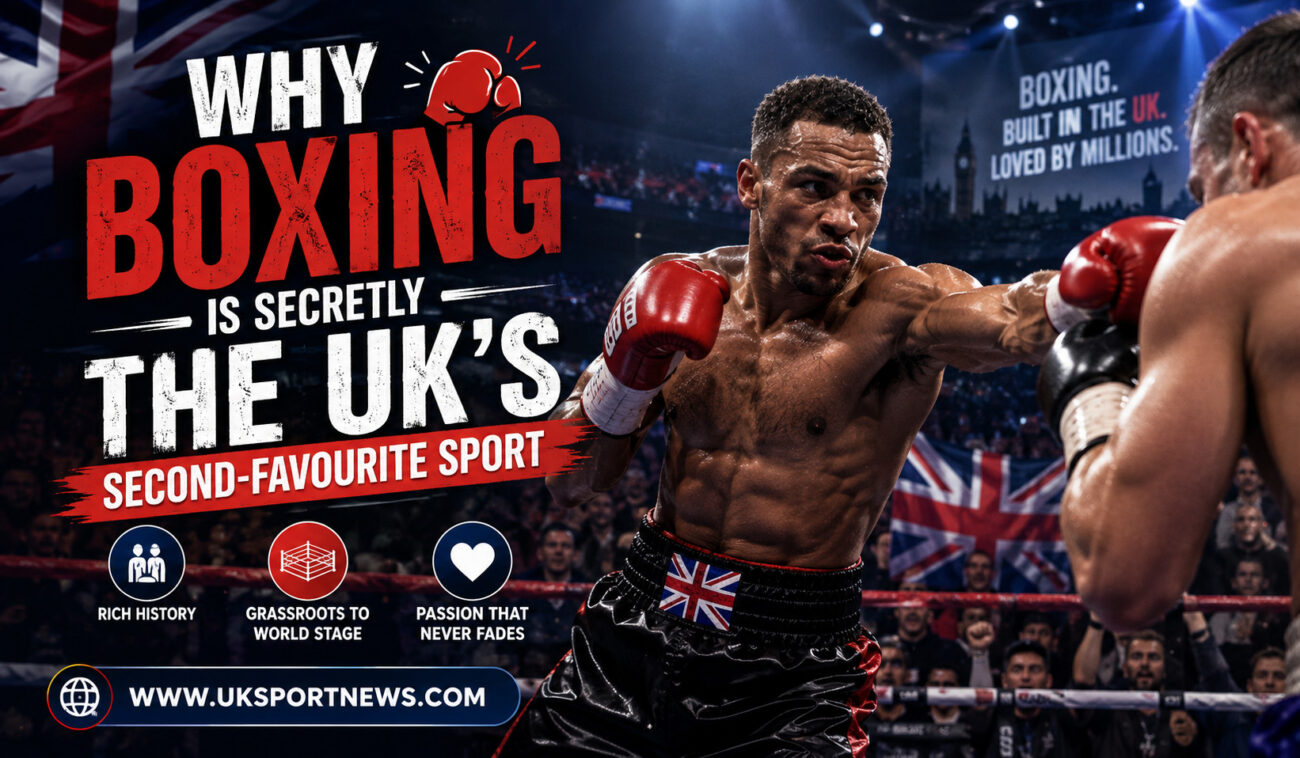
Ninety-six thousand people packed into Wembley Stadium to watch Anthony Joshua fight Daniel Dubois, breaking the post-war British attendance record for a boxing event. A few years later, Tyson Fury’s fight against Arslanbek Makhmudov pulled an average of five million UK viewers a minute on Netflix, a number that would embarrass most Premier League fixtures outside the traditional big six. Boxing does not dominate back-page headlines the way football does, yet the numbers behind British boxing suggest it might genuinely be the country’s second-favourite sport.
The Case for Boxing’s Hidden Popularity
Boxing rarely gets treated as a mainstream British sport in everyday conversation, sitting somewhere between a niche pursuit and a Saturday night event. That framing does not match the numbers. When a major fight lands on free-to-access television, boxing in the UK routinely out-rates entire sports that get far more consistent media coverage.
Understanding why requires looking past weekly participation figures, which will never match a sport like football or running, and toward the two things boxing does better than almost anything else in British sport: filling stadiums and commanding attention on fight night.
The Numbers Behind British Boxing’s Reach
Record-Breaking Crowds
British boxing has repeatedly broken its own attendance records over the past decade. Anthony Joshua’s 2017 win over Wladimir Klitschko at Wembley Stadium drew 90,000 fans, matching the biggest post-war British boxing crowd on record. That mark did not last. Joshua’s later fight against Daniel Dubois sold 96,000 tickets, setting a new British record and beating the previous high of 94,000 set by Tyson Fury’s defence against Dillian Whyte in 2022.
No other UK sport outside football fills a 90,000 seat stadium on a regular basis, and even football rarely does it for a single individual fixture the way heavyweight boxing has managed three times in under a decade.
Television Numbers That Rival the Biggest Sports
For years, boxing’s biggest UK fights lived behind a pay-per-view wall, which limited reach even when interest was high. The record for a UK boxing pay-per-view sits at around 1.2 million buys, set by Floyd Mayweather against Ricky Hatton back in 2007, with Anthony Joshua’s biggest fights typically landing between one and one and a half million buys.
Then the paywall came down. Tyson Fury’s 2026 fight against Arslanbek Makhmudov streamed on Netflix rather than pay-per-view, and averaged around five million UK viewers a minute. That single number reframes the entire conversation about boxing’s true reach, since it suggests the ceiling was never really about public interest. It was about how difficult the sport made it to actually watch.
A Constant Supply of Global Storylines
Boxing benefits from something few UK sports outside football can offer: a genuinely global stage populated by British stars. Anthony Joshua, Tyson Fury, and a growing list of world champions across multiple weight classes keep Britain competing at the very top of a sport the entire world follows, not just a domestic league table nobody outside the country cares about.
That matters for casual interest. A British fighter headlining a genuine world title fight creates the kind of must-watch occasion that rugby, cricket, or tennis can only really produce during major international tournaments.
Why Boxing Does Not Feel Like Britain’s Second Sport
If the numbers are this strong, why does boxing rarely get discussed as Britain’s second sport in everyday conversation? A few factors explain the gap between perception and reality.
- Irregular scheduling: boxing has no fixed weekly calendar like football or rugby, so it disappears from the conversation between major fights.
- Low grassroots visibility: amateur boxing clubs do not generate the same everyday visibility as five-a-side pitches or Sunday league football.
- Historic paywall barriers: pay-per-view pricing kept boxing’s biggest nights out of reach for casual households for years, capping its cultural footprint even when interest was strong.
- Fragmented governing bodies: multiple world titles across the WBA, WBC, IBF, and WBO make it harder for casual fans to follow a single, clear narrative the way they can with a domestic football league.
Think of boxing like a brilliant film that only gets a limited cinema release. The quality and the audience appetite are both there, but the distribution has historically held the numbers back from matching the true level of public interest.
What Changes When the Paywall Comes Down
The shift toward streaming platforms such as Netflix and DAZN, alongside the BBC’s increased involvement in British boxing promotion deals, looks set to close that distribution gap. If a single fight can average five million UK viewers a minute without asking anyone to pay upfront, boxing’s true scale starts to look a lot closer to rugby or tennis than most casual observers would assume.
Promoters appear to have noticed. Multiple UK broadcasters have expanded their boxing coverage in recent seasons, moving away from a model built entirely around one-off pay-per-view nights and toward more consistent, accessible scheduling that keeps the sport visible between the headline fights.
Frequently Asked Questions
Is boxing Britain’s second most popular sport?
By stadium attendance and television reach during major fights, boxing regularly rivals or beats sports that receive far more everyday media coverage, even if it does not top participation surveys the way football or running do.
What was the biggest boxing crowd in UK history?
Anthony Joshua’s fight against Daniel Dubois at Wembley Stadium drew 96,000 fans, the largest post-war crowd for a boxing event in Britain, beating the previous record of 94,000 set by Tyson Fury’s 2022 defence against Dillian Whyte.
Why did Tyson Fury’s Netflix fight get such high viewing figures?
Removing the pay-per-view purchase barrier by streaming the fight on Netflix allowed a much larger casual audience to watch without paying a separate fee, resulting in an average UK audience of around five million viewers a minute.
How much did UK pay-per-view boxing typically cost broadcasters and viewers?
Major UK boxing pay-per-view events historically sold between one and one and a half million buys during Anthony Joshua’s biggest fights, with the all-time UK record of around 1.2 million buys set by Mayweather versus Hatton in 2007.
